How To Use SlideShare To Generate 1000's Of Views And Rank On The First Page In Google In 30 Days
One of the more underutilized tactics startups can use to drive traffic and leads is Slideshare marketing. Organic promotion mechanics, great SEO, and visual CTA's...
Slideshare has it all!
In fact, I'm about to go ham and create a few myself.
My buddy Dave Gerhardt and the team at
Drift
have been absolutely dominating Slideshare so I bribed him to share the blueprint for how they created & promoted a presentation that reached the first page of Google in less than 30 days and still generates a ton of leads for them to this day.
Here's Dave...
---//---
Back in October, I started working at
Drift
and was given one job from the founders: build us an audience. I’ve always worked in marketing roles (previously worked at HubSpot, Constant Contact and Privy) but this was my first time entirely focusing on demand generation -- and starting without any traffic.
I was so pumped to be part of a team that understood the value of marketing before really even having a product. Too many startups get so focused on being product-driven that marketing is an afterthought.
As Marc Andreesen said in Gabriel Weinberg and Justin Mares’ book
Traction
:
“The number one reason that we pass on entrepreneurs we’d otherwise like to back is they’re focusing on product to the exclusion of everything else. Many entrepreneurs who built great products simply don’t have a good distribution strategy. Even worse is when they insist that they don’t need one, or call [their] no distribution strategy a “viral marketing strategy.”
But the challenge today (other than finding founders who believe in putting marketing first) is that there is so much crap out there Leo Widrich from Buffer wrote 150 guest posts in Buffer’s first nine months just to get things moving -- and there are a few examples of companies who’ve done a great job building an audience before launching (Neil Patel has a great guide on this topic). Regardless, it’s really hard to build an audience today. 50% of content gets eight shares or less . So even if you’re a great marketer, it’s really tough to get people’s attention — never mind getting the right people’s attention. But in a world of constant noise, competing channels, and short attention spans, there is still a way to win and build an audience: you have to make something that is genuinely worth someone’s time. Plain and simple you have to make something that is better. And if you’re doing startup marketing, this should be encouraging, because for the most part, people are lazy. Everyone is looking for a hack or a shortcut, and that means that most people won’t put in the effort needed to get someone’s attention. But when it comes to building an audience, the only hack is putting in the work. At Drift, we reached a whole lot of qualified people for our business in just 30 days without spending a dollar on marketing:- We drove 28,000 organic views on this SlideShare deck
- Had 900+ LinkedIn shares and 700+ Twitter shares of the SlideShare content
- Increased organic blog traffic by 341% month over month
- Added 203 email addresses to our new weekly email newsletter (and indirectly grew our newsletter list over 600% in the same month this content was published; not directly related but when traffic is up all around, good things happen)
- Got featured on SlideShare’s homepage (#142 website in the world according to Alexa)
- We’re often on page 1 for “what is product marketing” (I use the word often only because another company with a significantly higher domain authority ended up re-posting the SlideShare deck, so they typically rank higher — but there are probably some other factors that I haven’t figured out yet as well).
- The SlideShare deck drove 24% of our blog traffic in November and 7% of our traffic so far in December, despite being published two months ago. Even if those traffic numbers keep declining, anyone who converts on that content in the future is basically a free lead for us. Inbound marketing FTW. All from one post.
Step One: Keyword Research
If you want to create something better, you have to do your research. Product Marketing was a new persona for us at Drift, so we wanted to find keywords that we’d actually have a shot at ranking for, and ones that would bring us meaningful traffic. Here’s a great resource on doing keyword research from HubSpot. “Product Marketing” had great monthly traffic, but decent competition. We could probably do better.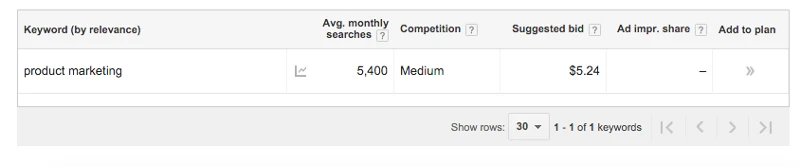 At the time we had been doing a lot of customer development — lots of lunches and coffees with local product marketers to help with Driftt’s product. And after talking to 10–12 product marketers, one theme started to bubble up: almost everyone had a different definition of what product marketing was responsible for. Boom: what if we created a great piece of content that helped to define product marketing? “What Is Product Marketing?”
Step Two: Content Creation
This is the whole “you have to make something that is genuinely worth someone’s time” part, and that’s made up of two key elements: a great story and great design. For this deck, after doing keyword research and seeing what people were writing about on places like Quora, Reddit and Inbound.org, a clear story started to take place. I wrote a simple outline in a Google Doc and then filled in the missing pieces with quotes from product marketers and nuggets from the articles I read. This research process probably took an hour total -- and 100% worth the time. Pro Tip: Get some design help. Once the content was pretty solid, I put everything in Google Slides and then enlisted the help of one of our awesome designers. There are so many free tools now (like Canva) to help with design for slideshare marketing, but nothing can help as much as a good designer. But you need to make it easy for them to help. Don’t ask them to design your deck from scratch. Use an existing template and do your best to get it to a point where if you had to, you’d be OK with hitting publish. A designer should just help make your deck tighter and take it from good to great.See below — nothing groundbreaking, just nice, clean, simple and better than anything I could have created:
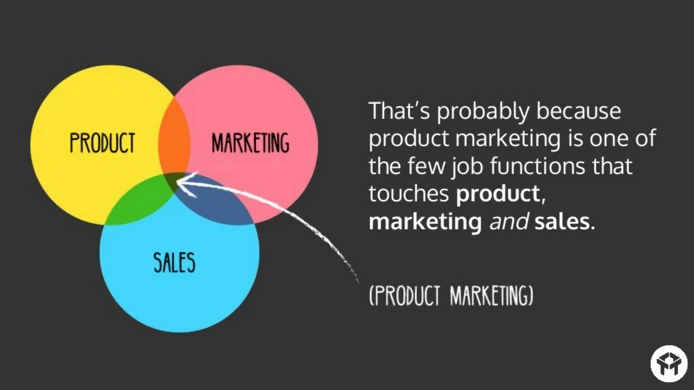
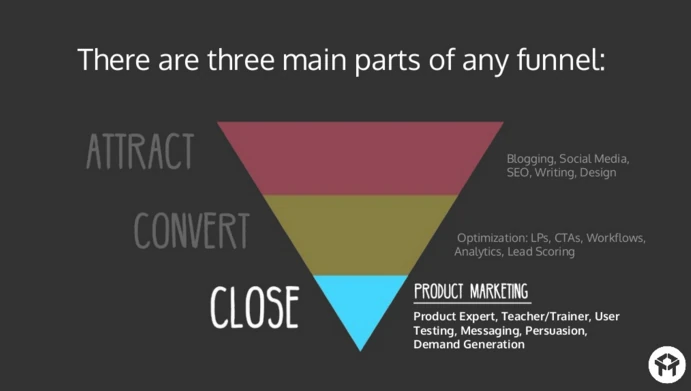 If you don't have a designer, there are plenty of people on Upwork.com you can find to help you out.
 And added a CTA at the end of the blog posts:
 Pro Tip: Put CTA’s inside of your deck on SlideShare.
You can put hyperlinks in SlideShare as long as they are after your fourth slide. Put one there and then another at the end of your deck.

 Pro Tip: Research people that have written about your topic and email them with a link and a pre-written tweet. BuzzSumo is a great tool to see which topics are popular on social, and Moz’s OpenSite Explorer is helpful to see who has linked back to those sites.
But out of all of the hustle, the most effective slideshare marketing strategy was the personal outreach -- and this proves true time and time again. Build a targeted list of people to reach out to.
If you don't have a designer, there are plenty of people on Upwork.com you can find to help you out.
Step Three: Put CTA’s Everywhere
I could probably think of worse things, but it would have been a huge bummer if this deck got a lot of traffic and we didn’t have a way to convert any of it since the main goal was to help grow our email list. Before we published the SlideShare deck, we installed an email pop-up on our blog using HelloBar:
And added a CTA at the end of the blog posts:
Pro Tip: Put CTA’s inside of your deck on SlideShare.
You can put hyperlinks in SlideShare as long as they are after your fourth slide. Put one there and then another at the end of your deck.
Step Four: Hustle For Distribution
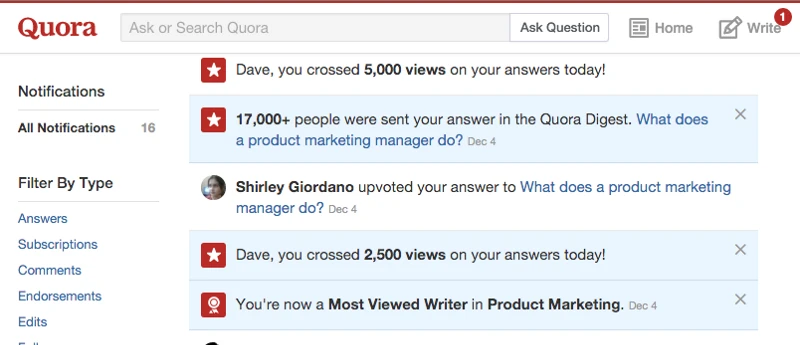
We had very little existing blog traffic or email subscribers when we published this deck, so we didn’t have the luxury of just promoting the deck to our existing audience and asking them to share it. Instead, we really had to hustle to get distribution — but this is something that should apply to any piece of content you create. Too often people spend a few days creating something and a few minutes marketing it. Treat your long-form content like it’s own marketing campaign and make a mini-plan for it. This doesn’t have to be super thorough, but it’s always a good exercise to make a checklist in Evernote of all of the possible places you could promote your content. We emailed everyone that we had talked to during customer development and asked them to share the deck, sent the link to advisors, influencers, and found high-traffic places to hop in on any conversations related to product marketing. For example, this Quora thread on the role of a product marketing manager has over 23,000 views. The answer we posted there got 5,000 views, and as a result, Quora featured it in their weekly email which went out to 17,000 subscribers:
Pro Tip: Research people that have written about your topic and email them with a link and a pre-written tweet. BuzzSumo is a great tool to see which topics are popular on social, and Moz’s OpenSite Explorer is helpful to see who has linked back to those sites.
But out of all of the hustle, the most effective slideshare marketing strategy was the personal outreach -- and this proves true time and time again. Build a targeted list of people to reach out to.